The Allure of a Mystery That Refuses to Explain Itself
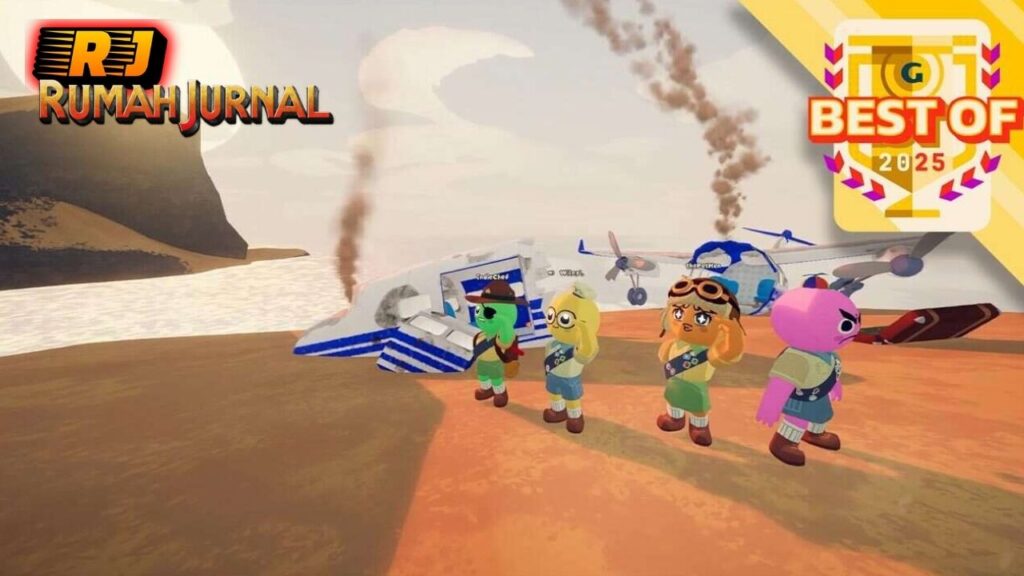
Four scouts set out on what should have been an unforgettable end-of-year adventure. Instead, a mechanical failure sends their plane spiraling into the Pacific Ocean. They survive the crash, but their relief is short-lived. The island they wash up on is not merely remote—it is deeply strange. Every step forward introduces more questions than answers. This is the premise of Peak, a game whose narrative magic lies not in explanation, but in omission.
For anyone who remembers Lost, the resemblance is immediately striking. Both stories begin with a crash, a group of survivors, and an island that seems to possess a will of its own. What follows is not a straightforward survival tale, but a slow descent into layered mysteries that grow more complex the longer you stay.
Why Lost Worked: Mystery Over Resolution
Lost became a cultural phenomenon largely because it embraced uncertainty. The island was not just a setting—it was a character. Underground bunkers appeared where none should exist. Secret organizations emerged without warning. A smoke monster roamed the jungle, defying logic and explanation. Each discovery pulled viewers further away from any clear understanding of what was really happening.
One former writer from the Lost team later admitted that many twists were introduced simply because they were strange, compelling, or unexpected. Long-term explanations were often an afterthought. Surprisingly, this lack of rigid planning became a strength. For six seasons, viewers were hooked not because they understood the island, but because they didn’t.
The mystery became part of everyday life. Theories spilled out of the television and into offices, classrooms, and online forums. Lost thrived in the space between knowledge and confusion.
Peak’s Island as a Living Question
Peak borrows that same philosophy. The island is not there to be solved—it is there to be experienced. As players climb higher, the environment becomes increasingly surreal. Underground tombs appear beneath solid rock. Scoutmasters return as undead figures. Statues watch silently, and magical items bend the rules of time, temperature, and even anatomy.
What makes Peak remarkable is its restraint. The game never stops to explain why these things exist. There is no exposition dump, no definitive lore book that ties everything together. Instead, meaning is scattered through environmental clues, strange mechanics, and unsettling imagery.
The climb itself is deceptively simple. You scale the mountain, manage stamina, and try not to freeze or burn. But beneath that mechanical simplicity lies a dense web of implied history. Every relic suggests a story that may never be fully told.
Environmental Storytelling Done Right
Peak relies heavily on environmental storytelling—the idea that narrative is conveyed through surroundings rather than dialogue. A pair of glowing eyes watching from behind a distant rock tells a story without words. A book that strips away skin and organs implies rituals, sacrifices, and consequences far beyond what the player can see.
This approach mirrors Lost’s method of revealing story through discovery. Hatch doors, Dharma Initiative logos, and cryptic countdown timers never came with clear explanations at first. They existed to unsettle, to provoke curiosity, and to deepen the sense that the island operated on rules beyond human understanding.
In both cases, mystery is not a puzzle to be solved—it is an atmosphere to be absorbed.
Development Parallels Between Peak and Lost
Interestingly, the behind-the-scenes stories of Peak and Lost also share similarities. Lost did not begin with a fully mapped-out ending. Its writers allowed the story to evolve organically, responding to audience reaction and creative momentum.
Peak followed a comparable path. Developed by Aggro Crab in collaboration with Landfall, the game was initially intended as a smaller, more contained project. There was no elaborate long-term content roadmap. The plan was simple: release the game, then move on.
That plan changed almost overnight. After Peak sold over a million copies in just days, the developers were suddenly faced with a living, breathing world that players wanted to explore further. Like Lost’s writers, they now had an audience deeply invested in mystery—and expectations that demanded expansion rather than closure.
The Beauty of Unanswered Questions
Peak’s post-launch additions feel like echoes of Lost’s most enigmatic moments. Magical idols that protect against extreme environments appear without explanation. Tombs suggest ancient civilizations, but never confirm their fate. The island feels older than memory, yet strangely aware of the player’s presence.
This refusal to explain everything is not a flaw—it is the core of Peak’s identity. Just as Lost’s unanswered questions became part of its legacy, Peak’s ambiguity invites players to construct their own interpretations.
Was the island always magical, or did the scouts trigger something ancient? Are the undead remnants of past explorers, or manifestations of the mountain itself? Peak never answers—and that silence is powerful.
Why Mystery Feels More Powerful Than Answers
Modern storytelling often prioritizes clarity. Lore is documented, timelines are fixed, and mysteries are neatly resolved. Peak resists that trend. It understands that mystery creates emotional engagement precisely because it leaves room for imagination.
Lost demonstrated that people are willing to stay invested even when answers are delayed—or never arrive at all. Peak applies that lesson to interactive storytelling. The longer you climb, the less certain you are of anything, except that something is deeply wrong.
And yet, you keep going.
Conclusion: Staying on the Island
The magic of Peak lies in its refusal to comfort the player with certainty. Like Lost, it understands that mystery is not about payoff—it is about tension, curiosity, and atmosphere. The island grows stranger the longer you remain, and the mountain becomes less a path to rescue and more a descent into myth.
Peak does not want to be fully understood. It wants to be remembered, debated, and revisited. Much like Lost, its greatest achievement may be that even when the climb ends, the questions do not.
And perhaps that is the point. Some islands are not meant to let you leave—especially if your body was never found.
Baca Juga : Understanding hi88 nha cai and sai ly Hi88 Structure
Cek Juga Artikel Dari Platform : koronovirus